Parents often reach a crossroads when their child starts showing interest in football. Should they join a local football team, or would structured football training be a better fit? The choice is not always obvious, especially for children aged 4–12, when development, confidence, and enjoyment matter far more than results.
Understanding the difference between football training and football teams can help parents make the right decision for their child’s long-term growth, not just their next season.
Understanding Football Teams
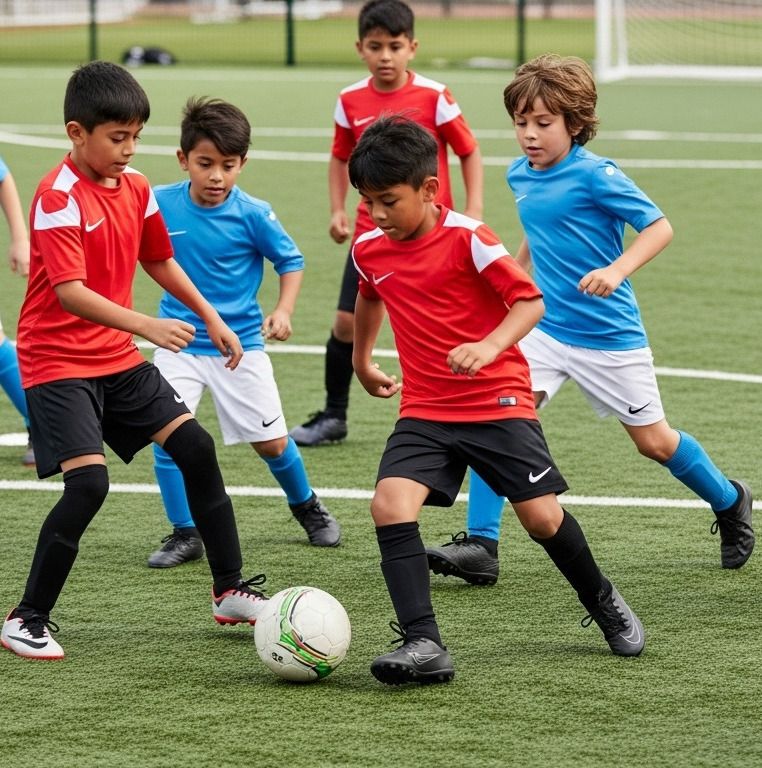
Simply put, traditional football teams are usually competition-based. Children train together during the week and play matches on weekends. Success is often measured by wins, league tables, and trophies.
For some children, especially those who thrive on competition and already possess strong foundational skills, football teams can be motivating and exciting. They provide structure, camaraderie, and exposure to match scenarios.
However, for many young players, football teams introduce challenges early on.
-
Training time is often limited, with sessions focused on preparing for games rather than skill repetition.
-
Playing time can vary widely, especially as children get older and teams become more results-oriented.
-
Children who develop later or lack confidence may touch the ball less and disengage.
-
Pressure to perform can overshadow enjoyment, particularly for sensitive or beginner players.
At younger ages, these factors can shape how a child feels about football for years to come.
What Is Professional Football Training?
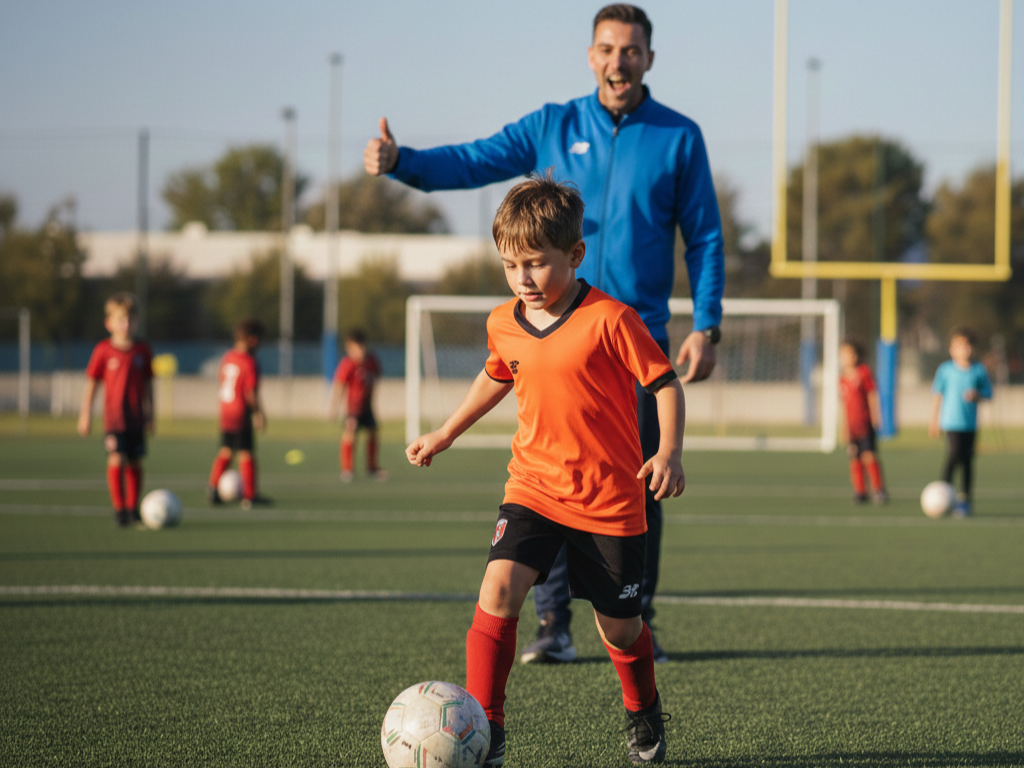
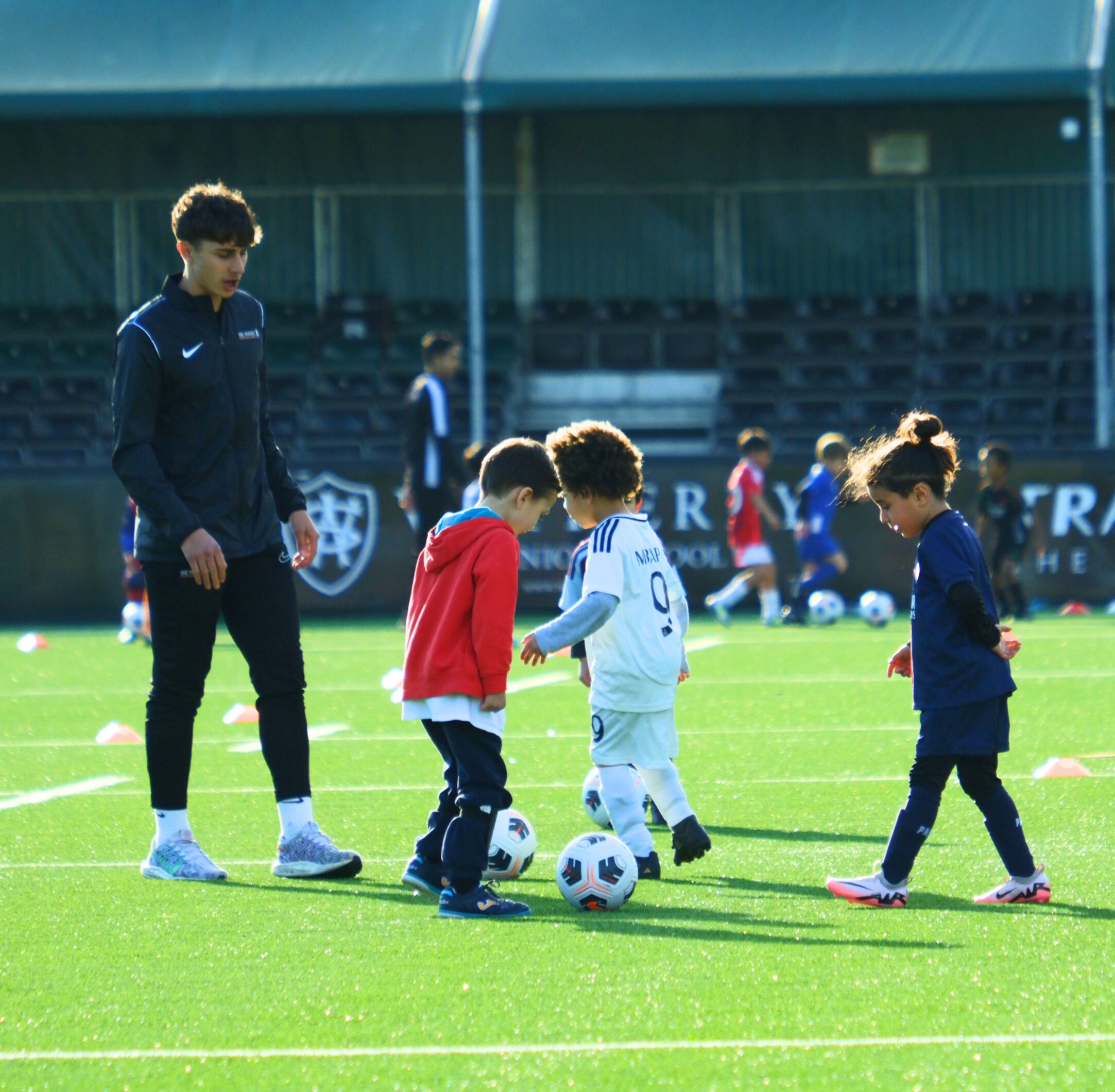
Professional football training programs, sometimes referred to as soccer academies or development programs, focus on individual skill development rather than team results. Sessions are designed to improve technical ability, coordination, and confidence in a low-pressure environment.
Instead of preparing for matches, training emphasizes repetition, exploration, and learning through play.
Key characteristics of football training include:
-
High ball contact for every child
-
Age-appropriate skill progression
-
Small-sided activities and games
-
Emphasis on enjoyment, confidence, and growth
-
Minimal pressure to compete or compare
This approach is especially effective for younger players and beginners, who benefit most from time on the ball and positive reinforcement.
Football Training vs Football Teams: Key Differences
When comparing football training vs football teams, the biggest difference is not structure, but intent.
Football teams prioritize collective outcomes. Football training prioritizes individual development.
Here is how that difference shows up in practice.
Skill Development
Football training provides significantly more touches on the ball per session. Young players improve faster when they are constantly involved rather than waiting turns or playing fixed positions.
Confidence and Enjoyment
Training environments are typically more supportive and exploratory. Children are encouraged to try new skills without fear of letting teammates down.
Pressure and Expectations
Football teams often introduce performance pressure early, even unintentionally. Training programs are designed to remove that pressure and build intrinsic motivation.
Inclusivity
Training programs tend to be more inclusive of different ability levels. Football teams may favor early developers, which can discourage others.
Flexibility
Football training usually offers more flexible schedules and does not require long seasonal commitments, making it easier for families to balance activities.
Which Is Better for Young Players?
There is no universal answer, but there is a strong developmental case for football training at younger ages.
For children aged 4–8, football training is often the better starting point. At this stage, children are still developing coordination, attention, and confidence. They need freedom to explore movement and skills without the pressure of competition.
For children aged 9–12, the choice depends on the child. Some benefit from combining football training with team play, while others thrive by continuing development-focused training until they feel ready for competition.
Importantly, football training does not close the door to teams later. In fact, children who build strong technical foundations through training often transition into teams more confidently and successfully.
Soccer Academy vs Club: What Parents Should Consider
Parents searching for soccer academy vs club are often really asking a deeper question: what environment will help my child enjoy football and improve?
When evaluating options, parents should consider:
-
Does my child enjoy pressure or shy away from it?
-
Are they getting enough time on the ball?
-
Do they leave sessions excited or anxious?
-
Is development prioritized over winning?
-
Is the coaching style positive and age-appropriate?
The best programs meet children where they are and help them grow at their own pace.
Why Development-First Training Matters
Early specialization and competition are increasingly common in youth sports, but research and experience consistently show that children benefit from development-first approaches.
Football training programs that prioritize skill, enjoyment, and confidence help children:
-
Build a lifelong love of the game
-
Develop resilience without fear
-
Improve coordination and decision-making
-
Stay engaged longer in sport
When children feel successful and supported, they are far more likely to continue playing, whether recreationally or competitively.
Finding the Right Balance
For many families, the ideal solution is not choosing football training or football teams, but understanding when each makes sense.
Football training builds the foundation. Football teams apply those skills in competitive environments.
Programs like We Make Footballers are designed to support that foundation by focusing on individual development, confidence, and enjoyment before competition becomes the priority.
Final Thoughts
When deciding between football training vs football teams, parents should think long-term. The goal is not to win early, but to help children grow into confident, capable players who enjoy football.
For young players especially, development-focused football training often provides the strongest start. It gives children the skills, mindset, and love of the game they need to succeed, wherever their football journey leads next.
If you’re curious whether development-focused football training is the right fit for your child, the best way to decide is to see it in action.
We Make Footballers offers free trial sessions at locations across the UK, giving children the chance to experience training that prioritises confidence, skill development, and enjoyment—without pressure or long-term commitment.
You can find your nearest academy and book a free trial in just a few clicks. It’s a simple, risk-free way to see how your child responds to a training environment built around their development.
Find a free football trial near you and get started today.