

How earning the right to win helps your child progress
For many children, their first experience of playing football comes with siblings or parents in the back garden or down the park. What happens in this environment can have a surprisingly big impact on a child’s ability and prospects of success in the game. This all comes from the concept of earning the right to win.
WMF Coaching Team
5 min read
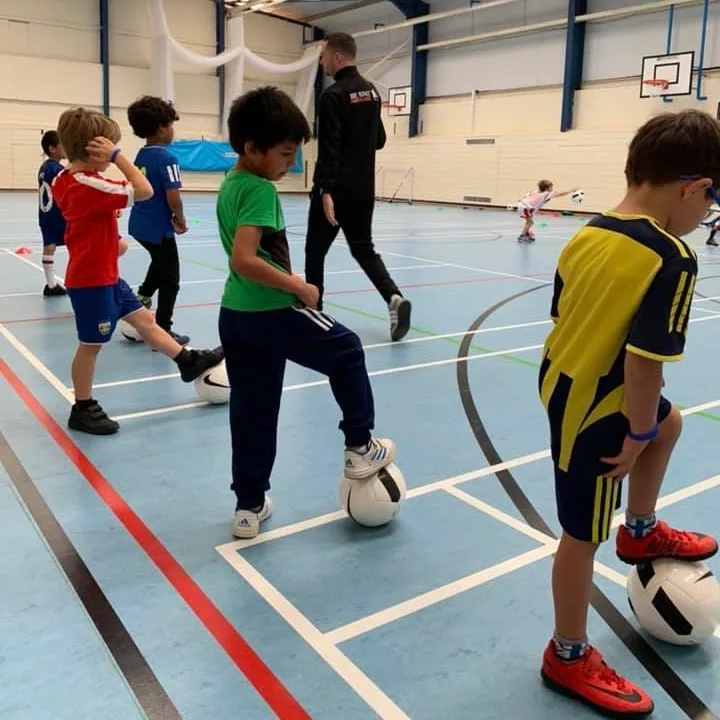
For many children, their first experience of playing football comes with siblings or parents in the back garden or down the park. What happens in this environment can have a surprisingly big impact on a child’s ability and prospects of success in the game. This all comes from the concept of earning the right to win.
The best players in the world are those who work hardest and understand that success and victory are not handed over on a plate.
To reach the top, a player must put in the effort to constantly overcome the challenges thrown at them – and that often starts in family kickabouts.
Siblings need no encouragement to allow their younger brother or sister to win just because of their age. With family bragging rights on the line, if the youngest wants victory, then they will have to earn it on merit.
The route to doing this is through hard work and overcoming the challenge posed by an older siblings’ size, greater experience, and perhaps even talent advantage.
Defying such odds makes success even sweeter, offering another important lesson – that the effort is well worth it for the feeling that victory brings. This in turn creates a thirst for more, breeding a winner’s mentality.
When professional footballers in England talk about how they made it, a huge number say that their journeys started playing against older brothers and sisters or friends.
The victories were sweeter because they involved showing older children up. But the failures were also important too, teaching players from a young age that failure is part of every sportsperson’s life and that it is how you come back from them that is important.
Declan Rice’s rise to becoming one of the finest defensive midfield players in the world with a £100 million price tag on his head began by playing football with his older brothers, Connor and Jordan.
Neither wanted to lose to their youngest sibling. Rice credits this with giving him a constant desire for improvement, as that was what was needed to beat his brothers – as well as teaching him that setbacks can be overcome.
Speaking to the Football Association as part of their Growing Up series, Rice said: “When I was six or seven, I’d be going to play with my brothers at five-a-side and I remember dribbling around all their mates who couldn’t believe it, for a young kid to be doing that to them.”
And what about when Rice did not win or dribble around older children? The failures he experienced as a child made him more robust for dealing with the disappointment of being released by Chelsea at the age of 14, having spent seven years in their academy.
Rice simply saw this as another challenge to be overcome. He upped his work rate, earning a place in the youth setup at West Ham United. Within a year of joining the Irons, he had signed his first professional contract.
Two years later he made his Premier League debut, two years after that his England debut and two years after that, he was a key component of the Three Lions side who went all the way to the Euro 2020 final.
But what of the role of parents in teaching their children about earning the right to win? The temptation some parents might feel is to let their child be victorious all the time to keep them happy.
This though can lead to problems. If a child is consistently winning, then any mistakes they make are being masked. There is no need for them to look at what they can do to improve. These mistakes can subsequently lead to bad habits in their games that are hard to break.
It can also lead them to think that they do not need to try to be successful, creating the impression that victory will be achieved without working hard or seeking improvement in their abilities.
If such an attitude becomes ingrained in a young player, then it can be hard to break and seriously detrimental to their future chances of success. Yes, you want your children to win – but they also need to understand the realism of how it is achieved and what happens when you are not successful.
This is why We Make Footballers always seek to drive improvement in players through a challenge – a concept common across sports.
Take baseball for example. When children take up the sport, they begin practising hitting with a heavily weighted bat. They find it hard at first but as their arms become used to the weight, their muscles strengthen.
When the weights are then removed, swinging the regularly-weighted bat is much easier. They can hit the ball harder and further, thus improving their abilities as a hitter and their chances of success.
At We Make Footballers, our weighted baseball bat equivalent is ensuring that children are playing at an age group or level where success has to be earned and does not come through pure natural ability.
Playing against older, more experienced children will be tough at first. No older opponent will be soft on them based on their age and so the younger child must work hard, developing and learning to compete with the older children.
This drives a marked improvement in their abilities. The alternative of leaving a talented child at their age group to dominate without ever being challenged creates a player who, when the time finally comes for them to compete against older children, does not have the appreciation of the hard work needed to become the best at a higher standard.
When a child joins a We Make Footballers academy, they are challenged to become the best they can be in a fun and safe environment.
They improve as footballers and people by earning the right to win – and in football, there is rarely a better feeling than seeing your hard work pay off with a victory.
Related Articles
Competitive Football Teams and Player Development in Ebbw Vale | We Make Footballers
Discover the competitive football pathway available through We Make Footballers Ebbw Vale and WMF Gwent, helping young players improve their technical ability, confidence and competitive match experience.
Competitive Football Teams and Player Development in Tredegar | We Make Footballers
Discover the competitive football pathway available through We Make Footballers Tredegar and WMF Gwent, helping young players improve their technical ability, confidence and competitive match experience.
Competitive Football Teams and Player Development in Brynmawr | We Make Footballers
Discover the competitive football pathway available through We Make Footballers Brynmawr and WMF Gwent, helping young players develop their technical ability, confidence and match experience.